FARfit
Stylish Looks, Powered
by Generative AI
Integrated AI for FARFETCH E-commerce platform.
The idea of fashion and advanced technology working together to provide personalized style recommendations.
- Project type
- UI/UX Design
- Role
- UI/UX Designer
- Team
- Individual work
- Duration
- 3 Weeks
- Tools
- Figma, Adobe Suite
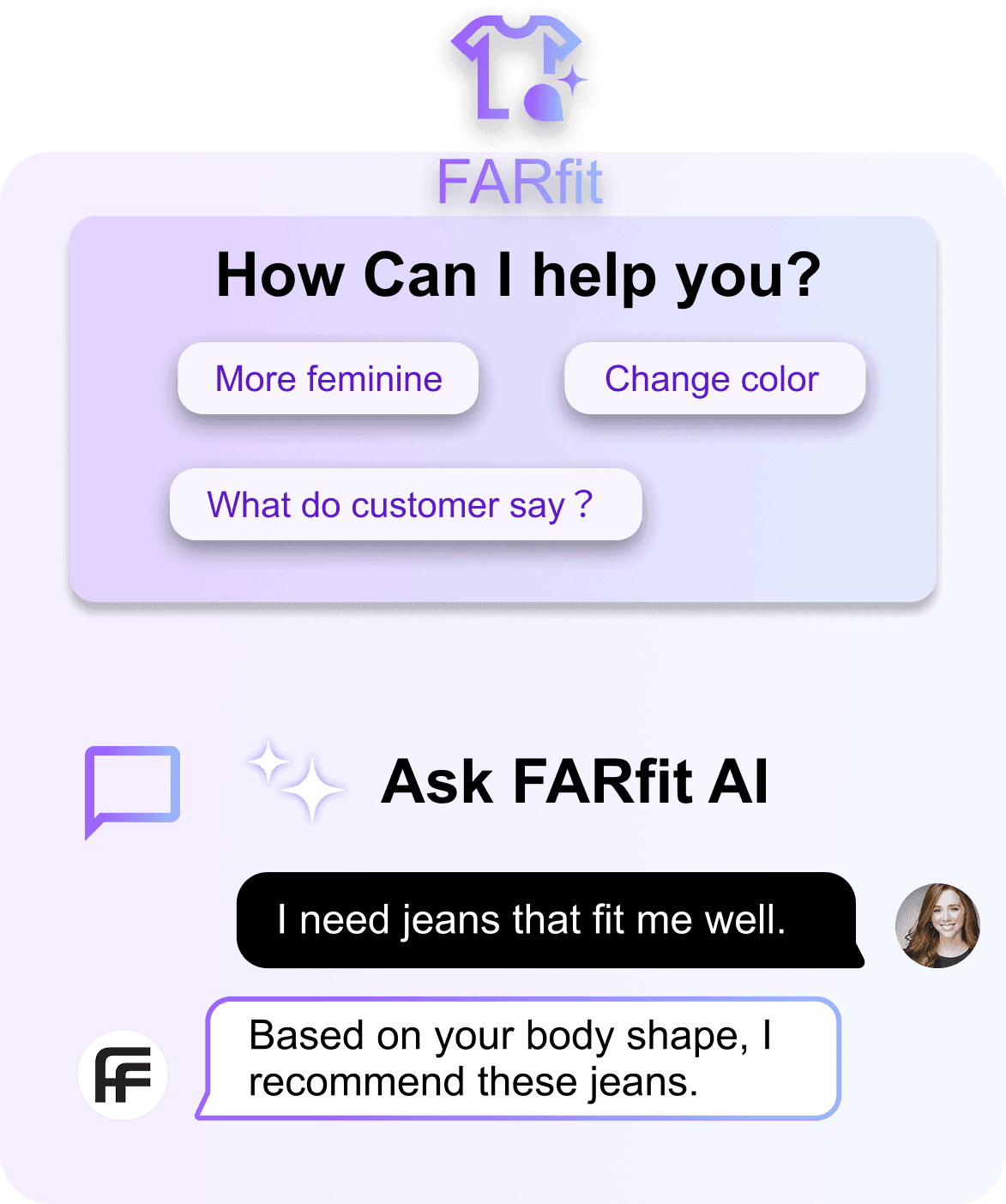
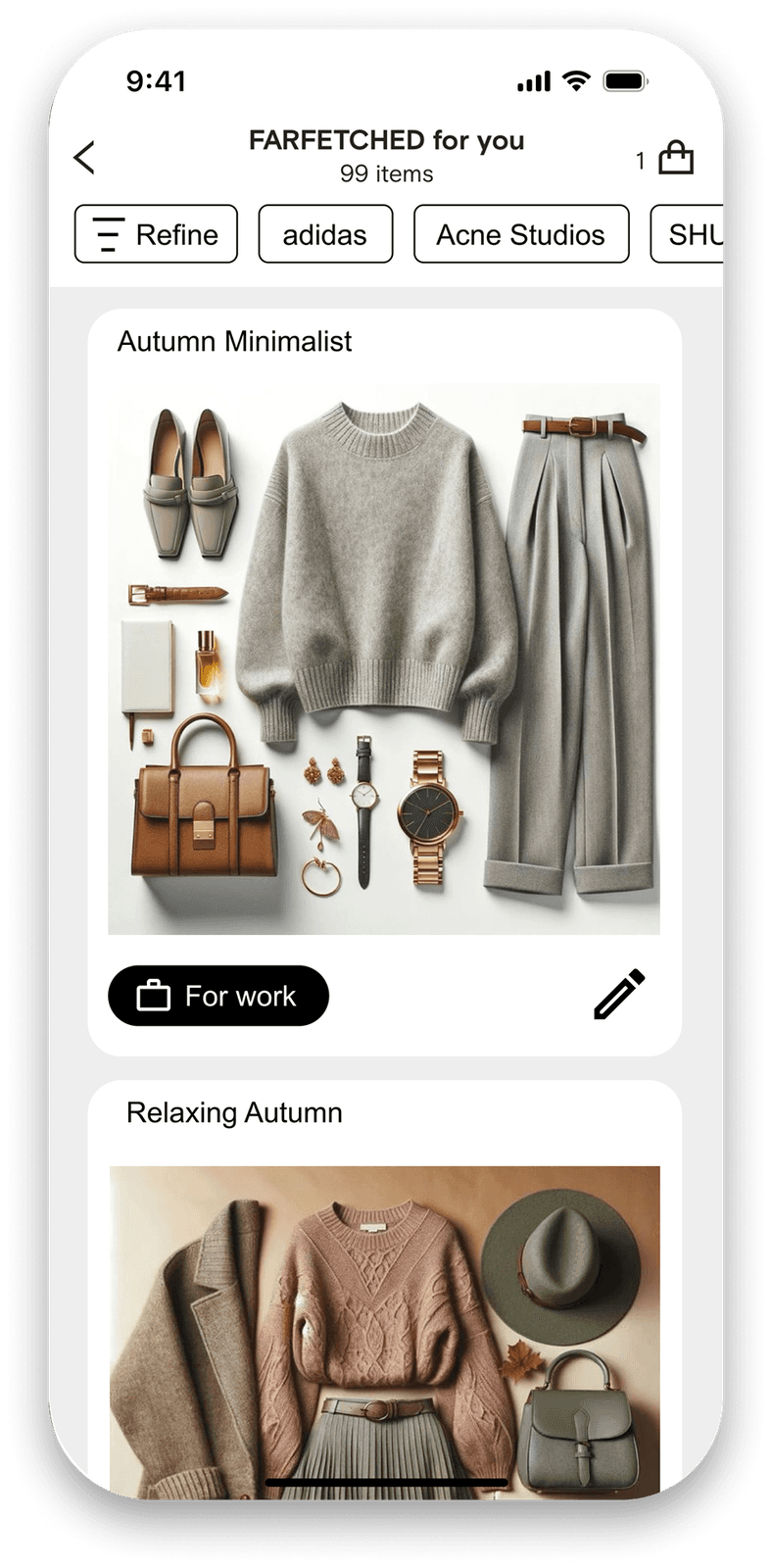
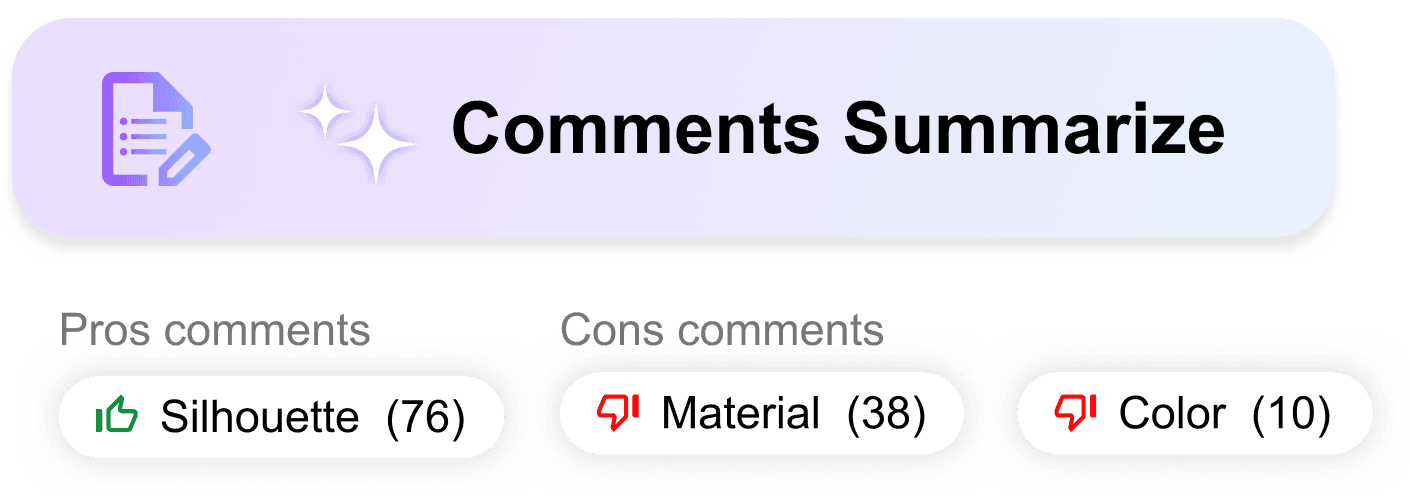
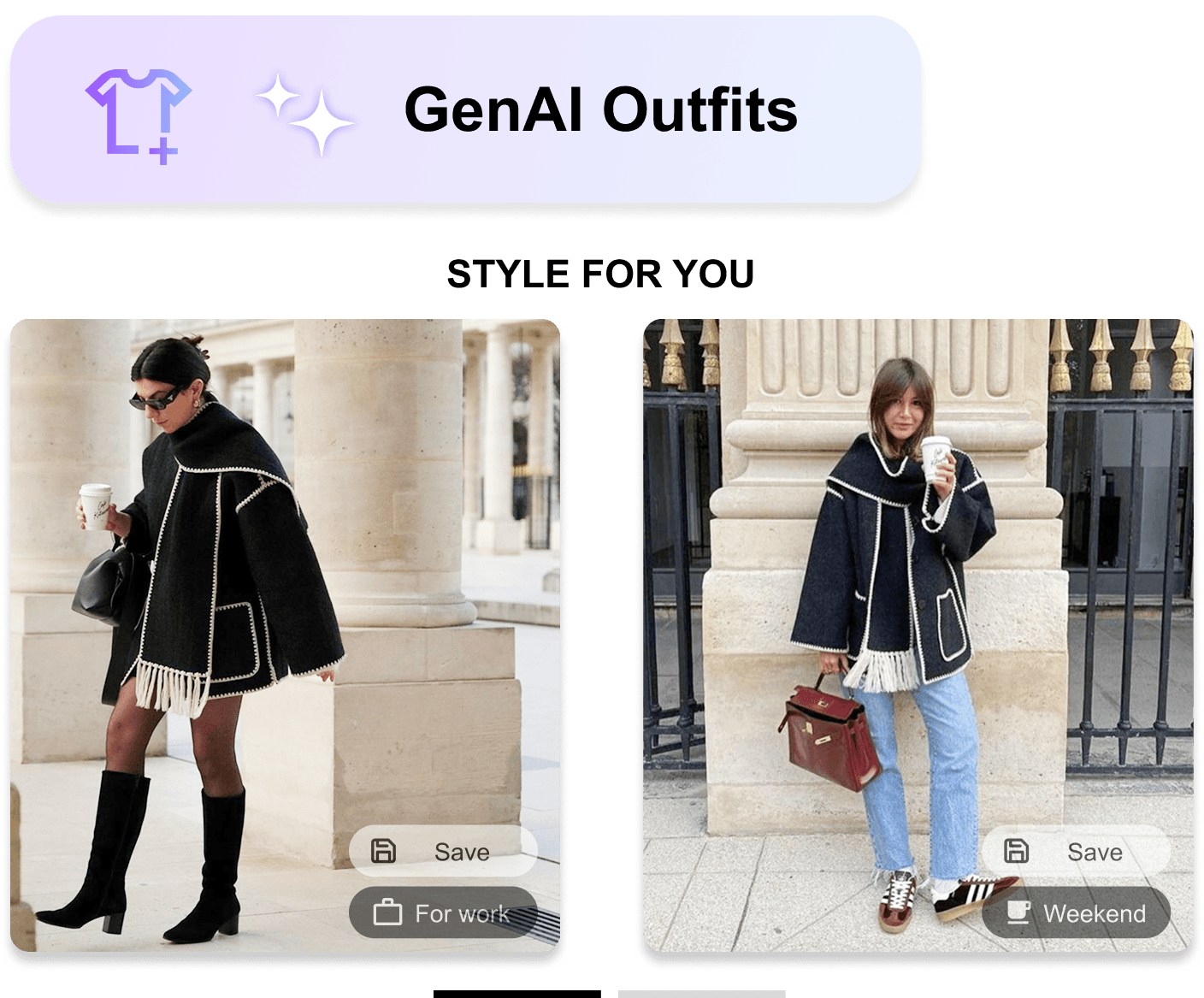
FARfit integrates generative AI into FARFETCH, the luxury e-commerce platform, turning a catalog into a personal styling experience that recommends complete, tailored looks.
Background
As an online shopper who loves fashion, I use FARFETCH regularly. Watching AI features spread across the platforms I use every day, I wanted to explore how AI image-generation could live inside FARFETCH, enhancing the experience with personalized styling rather than leaving shoppers to browse a catalog alone.
Open the world of the best luxury curators and creators to customers everywhere.
Users' Insights
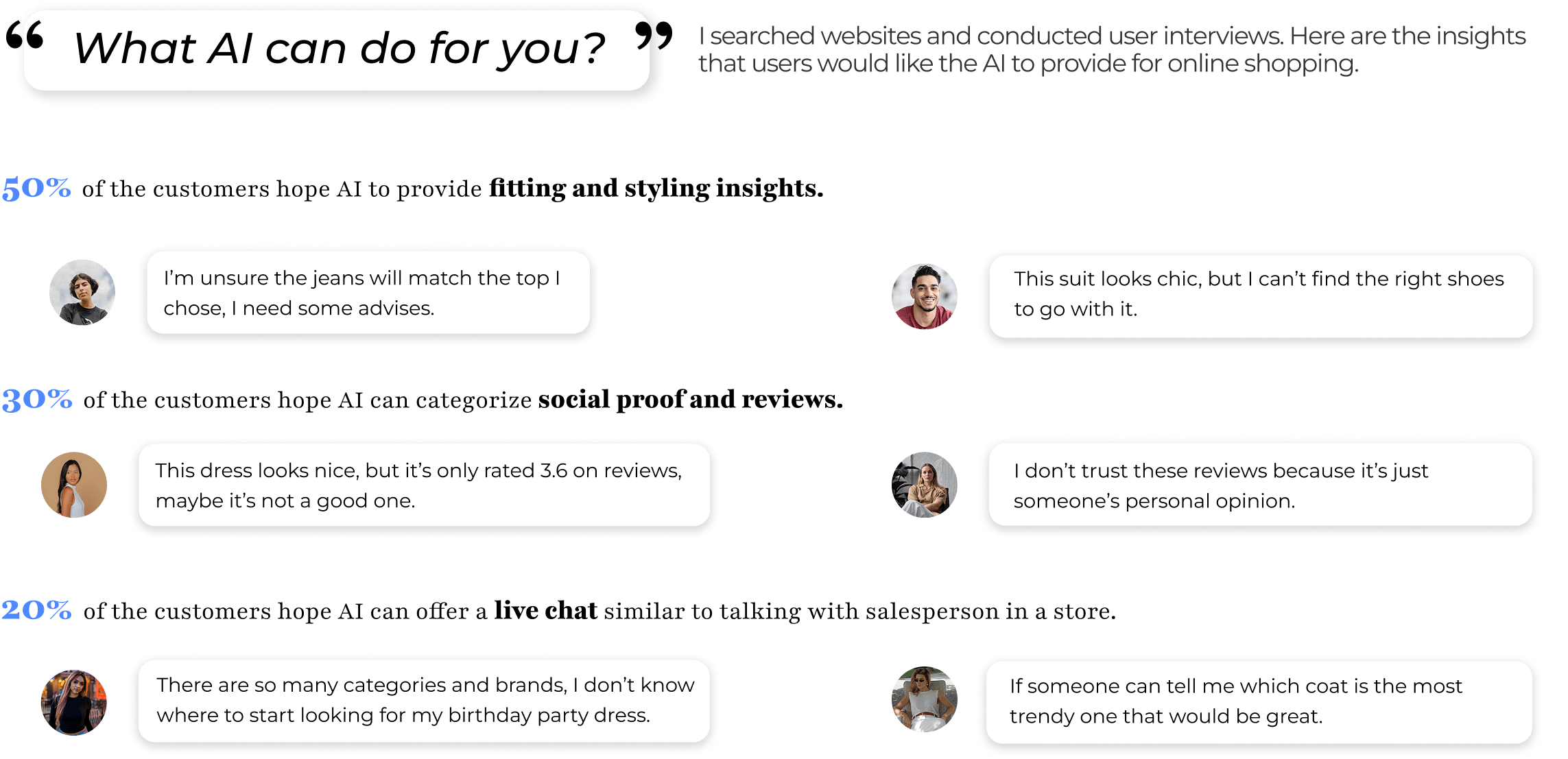
To ground the concept, I combined website research with user interviews. Three needs stood out: 50% of shoppers wanted fitting and styling insights from AI, 30% wanted AI to organize social proof and reviews, and 20% wanted an AI live chat that behaves like an in-store salesperson.
Research
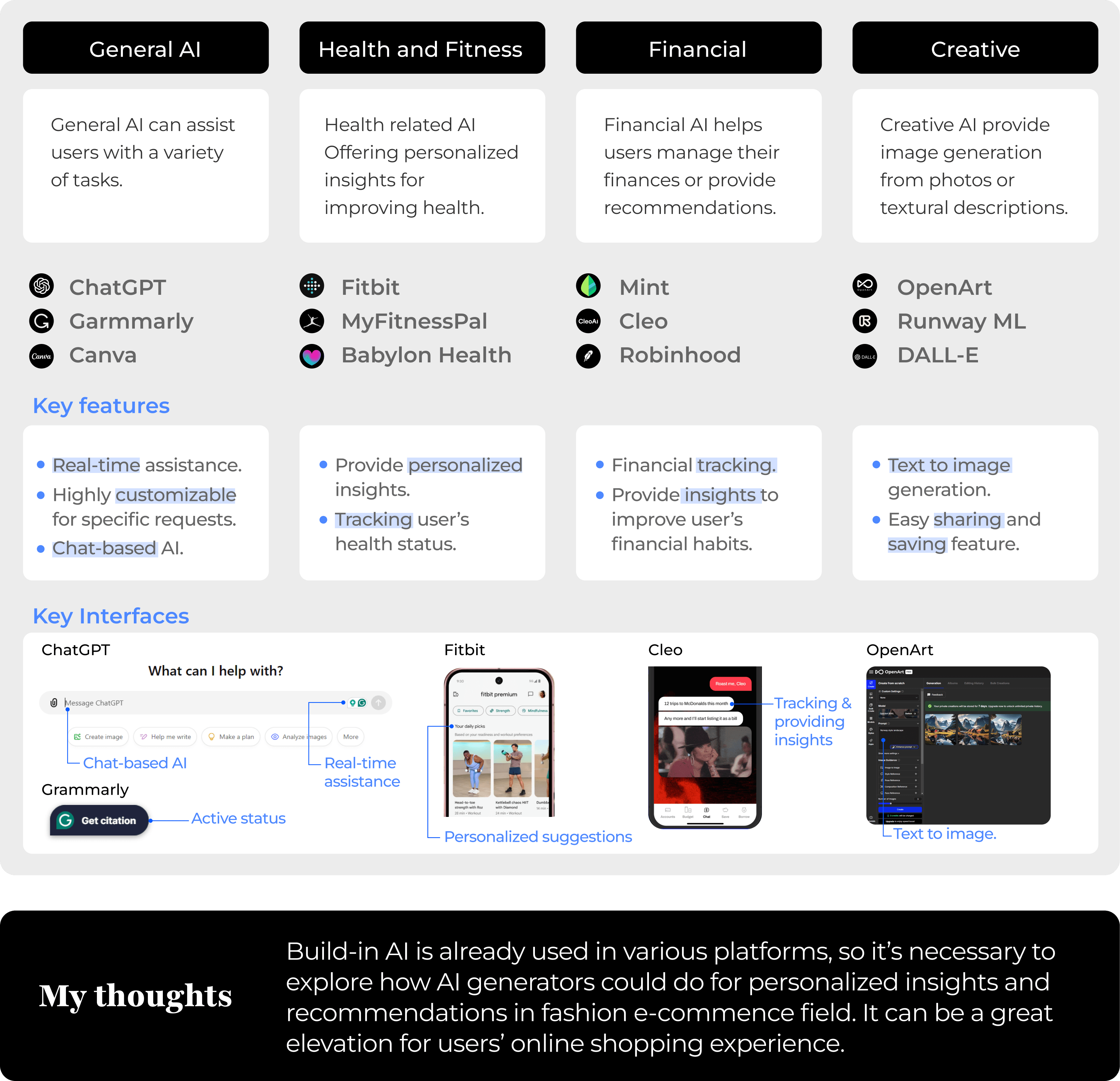
I mapped the opportunity by studying platforms already building AI in, charting the shopper's journey, and sizing up the competitive landscape.
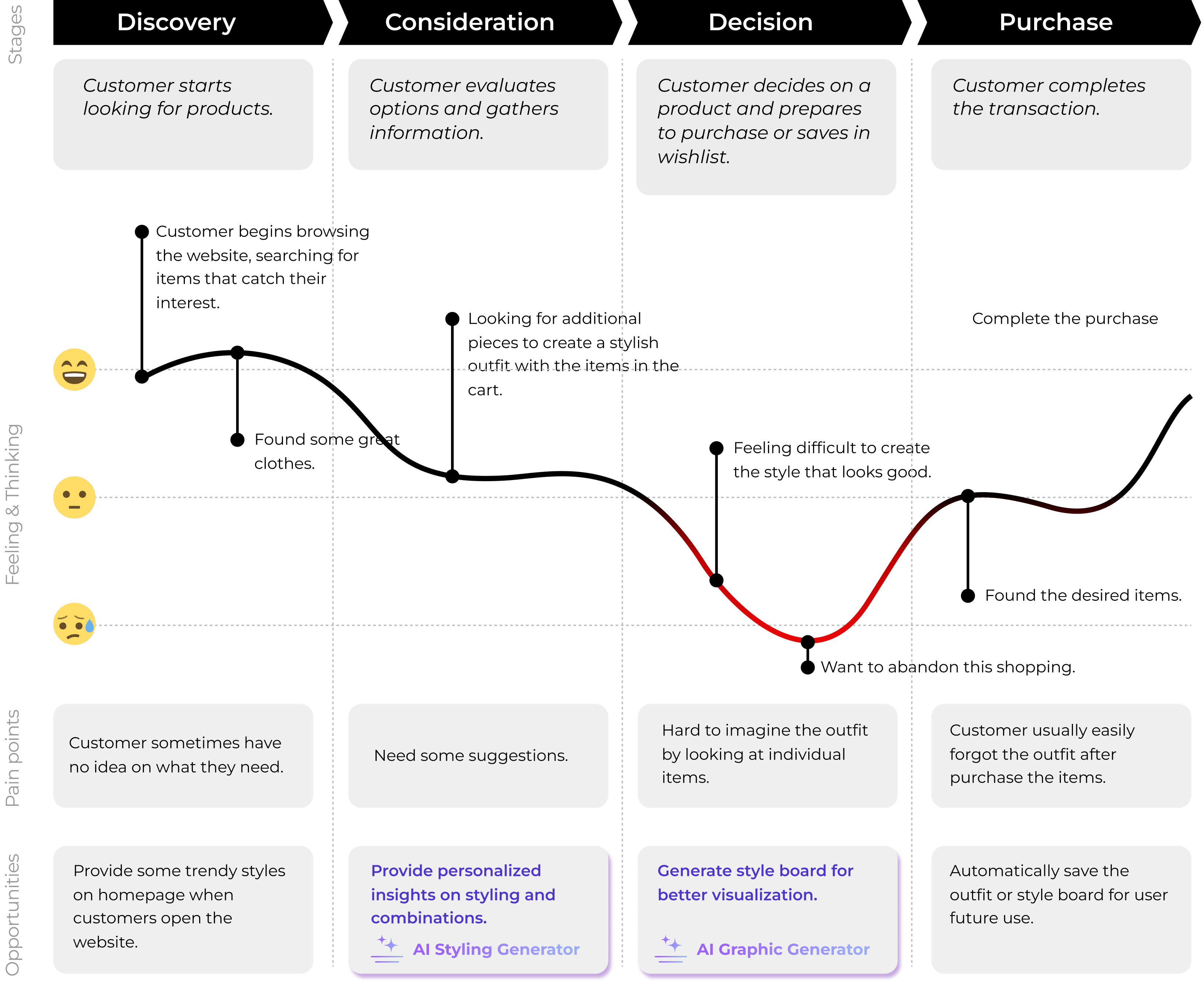
User Journey Map
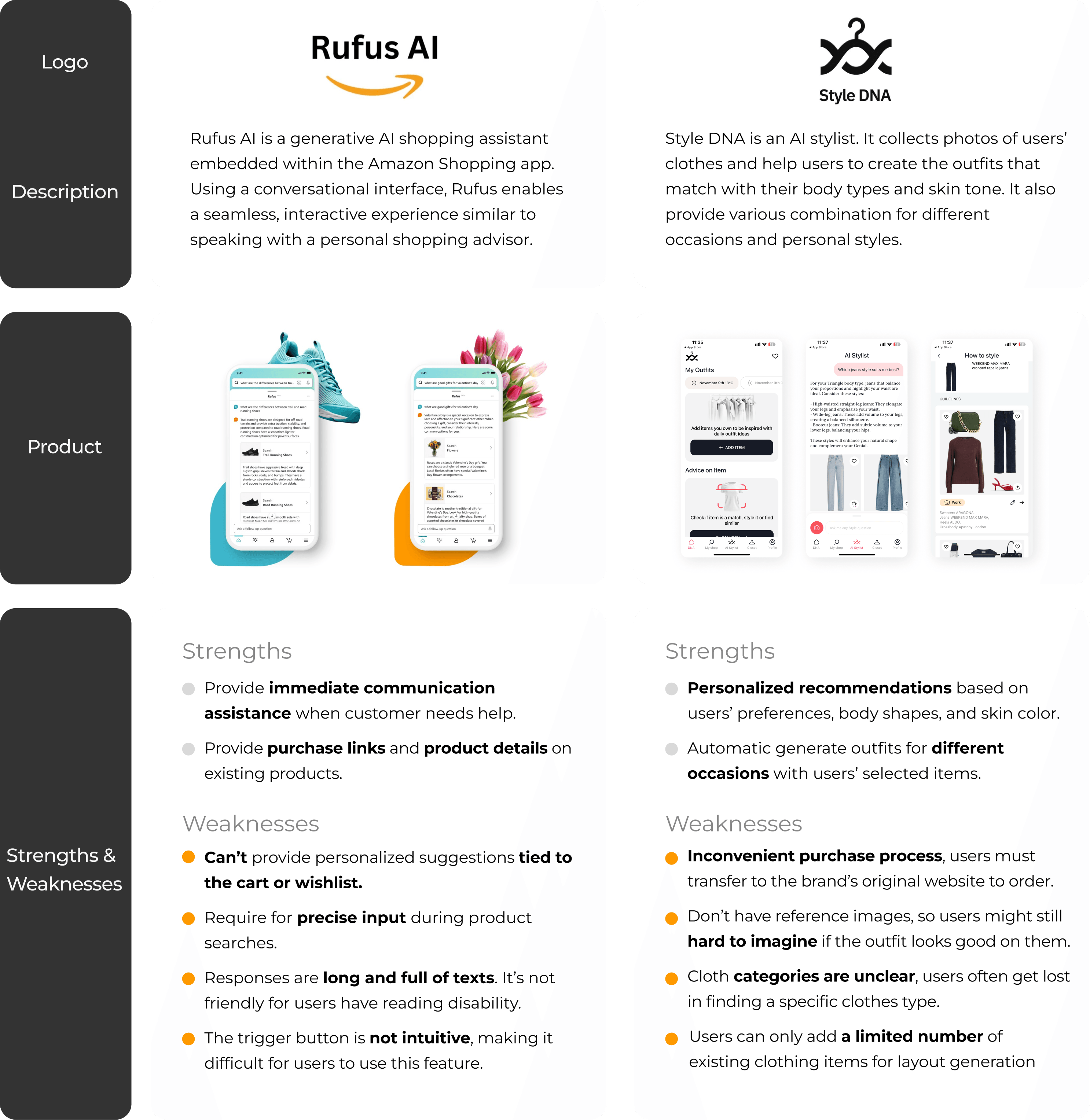
Competitor Analysis
Conclusions
The competitor analysis pointed to concrete ways to improve the boutique's online experience. The gaps competitors left open became the brief for the design.

Ideation
I placed the current interface next to the proposed direction to pressure-test where AI could add the most value.
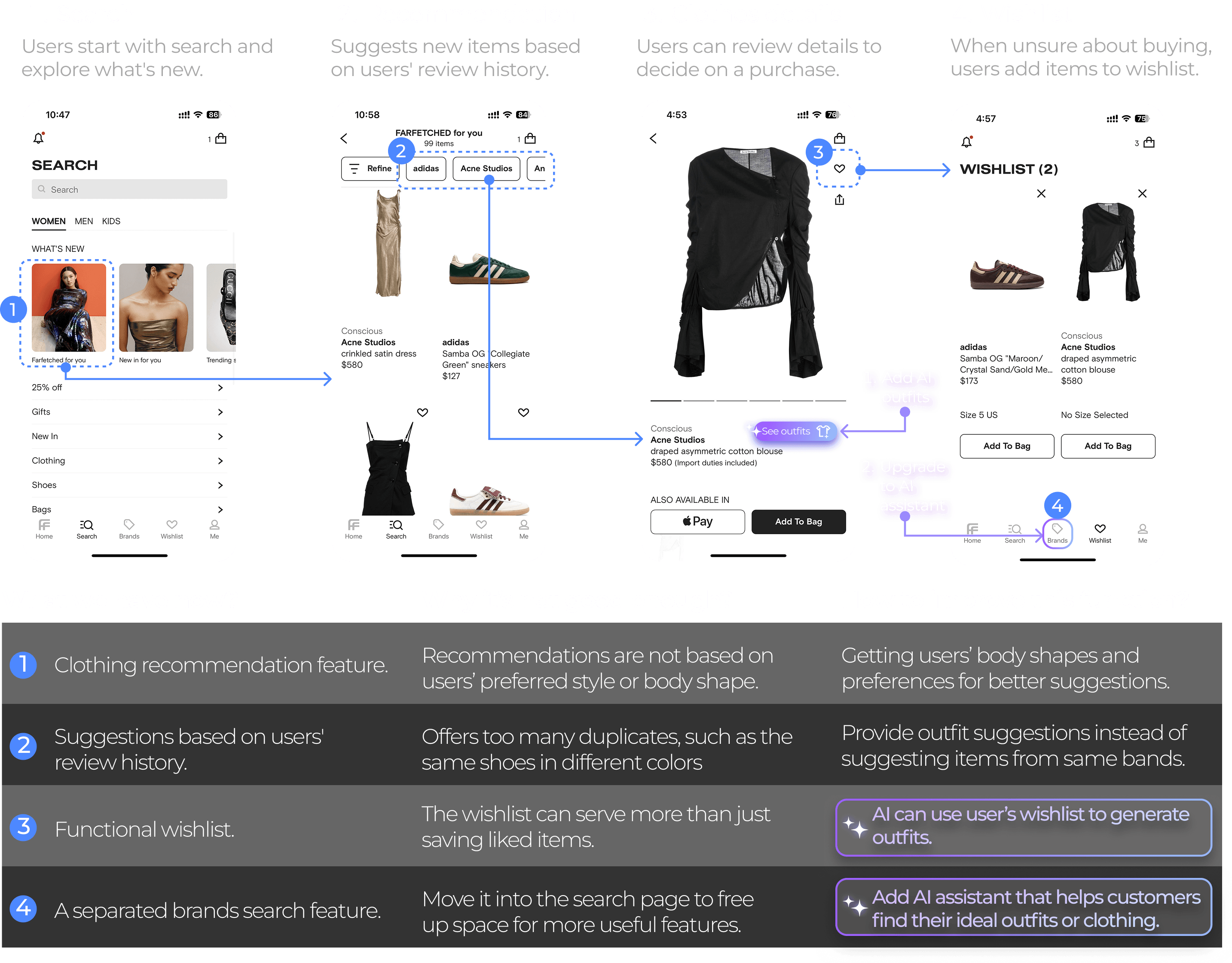
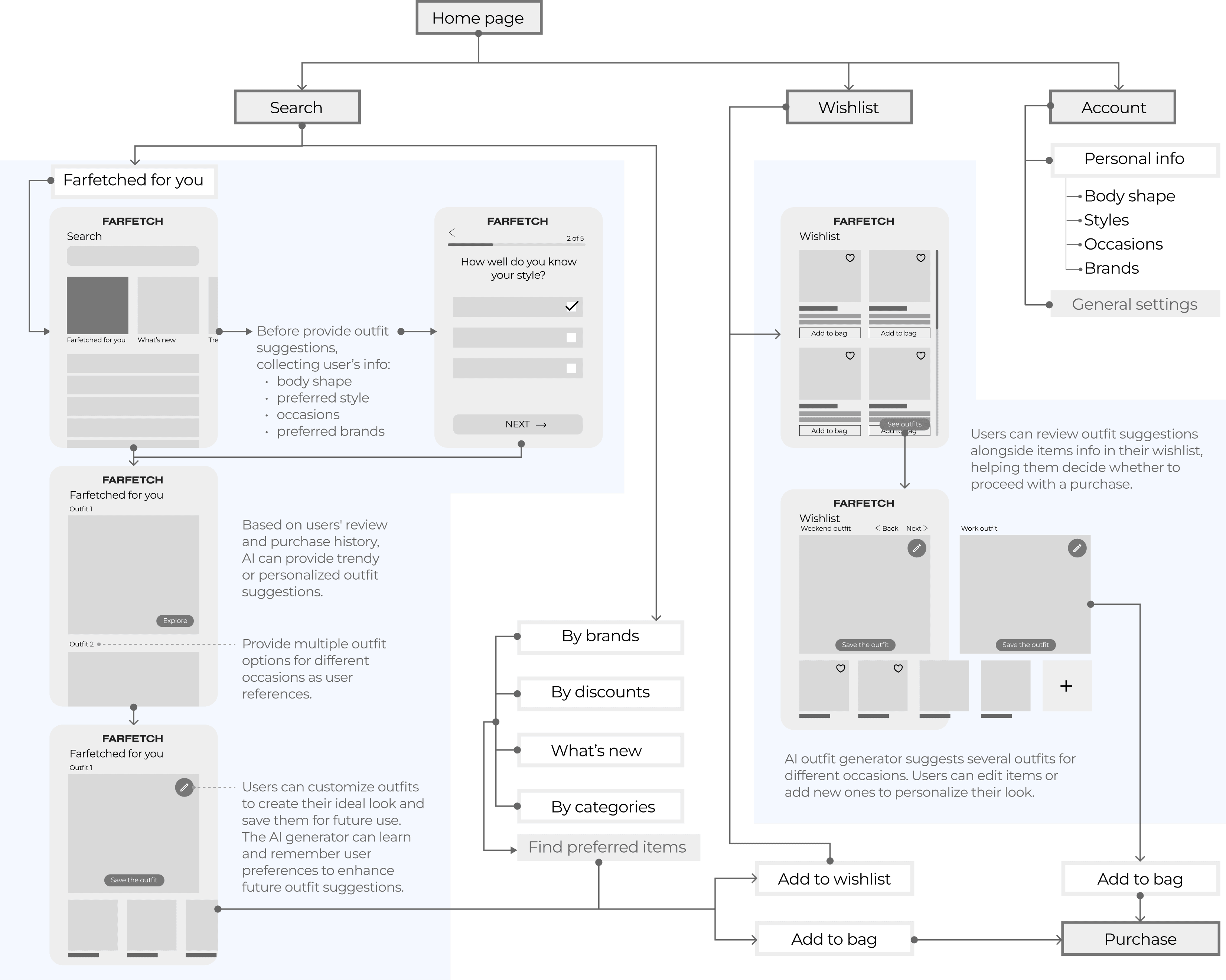
Information Architecture
A restructured architecture organizes the new AI features alongside the existing shopping flow.
High Fidelity
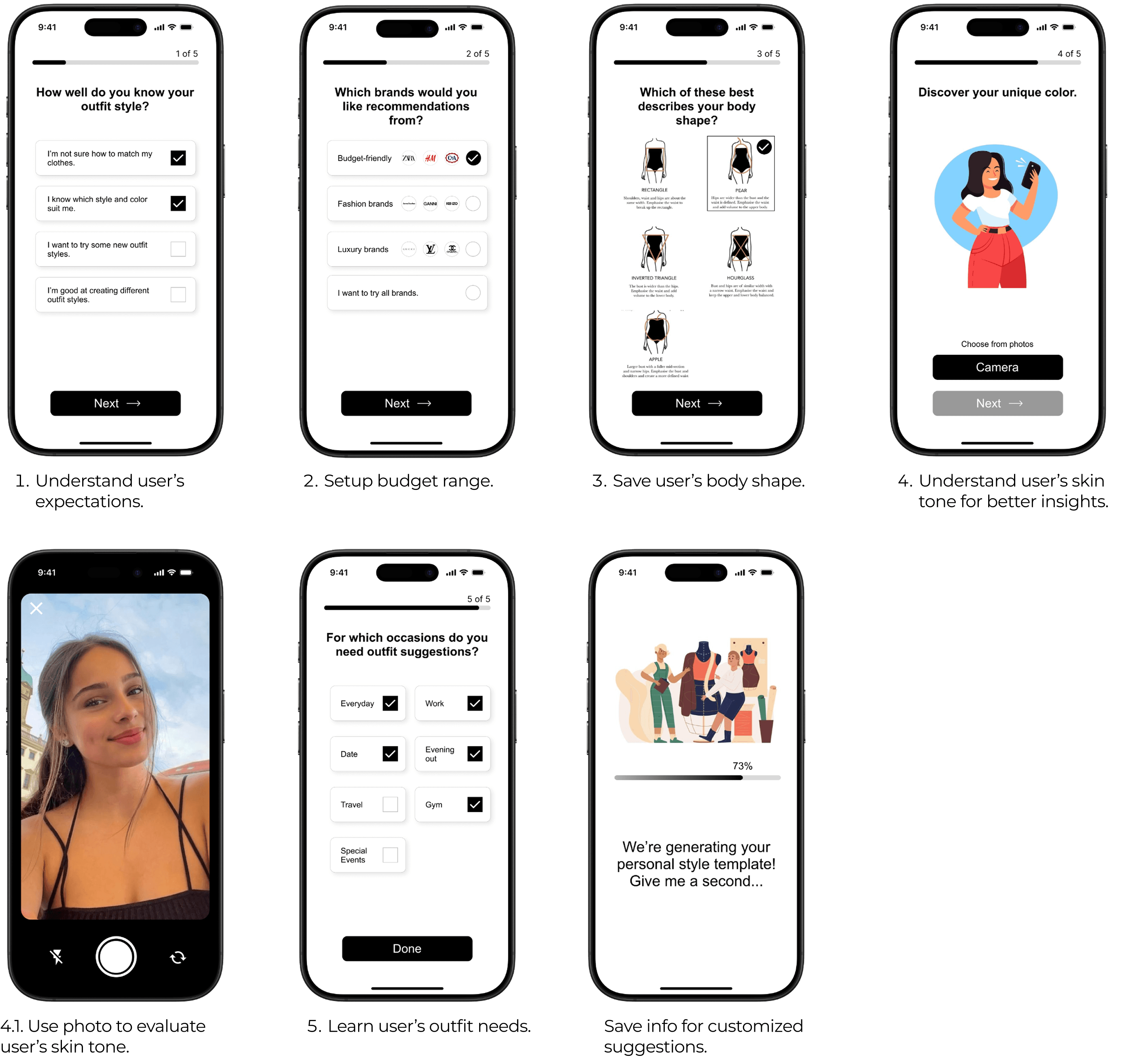
Scenario 1, collecting user information. Five quick questions capture what the AI needs to personalize: what the shopper is looking for, their budget range, body shape, skin tone (with an optional photo for better accuracy), and the occasion they're dressing for. The answers are saved so recommendations stay personal over time.
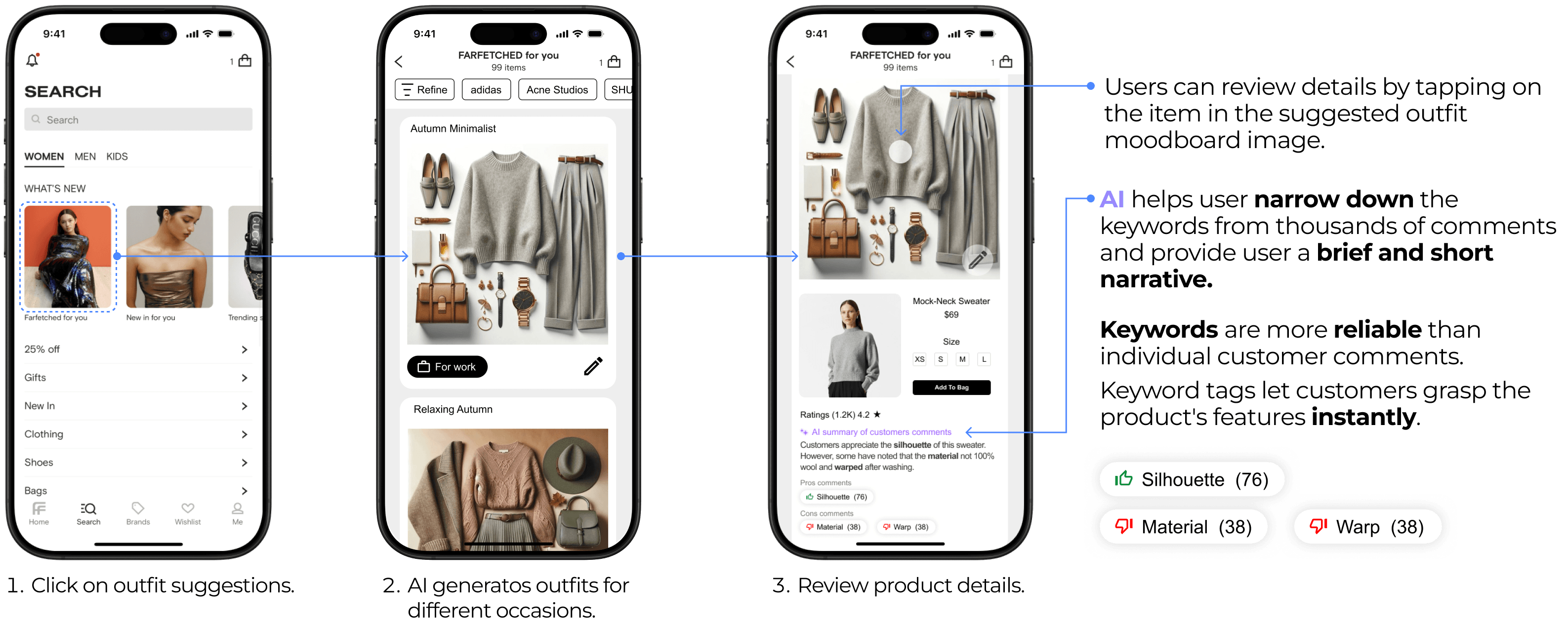
Scenario 2, direct recommendation. Once setup is complete, the outfit AI generator automatically serves tailored looks, no extra prompting required.
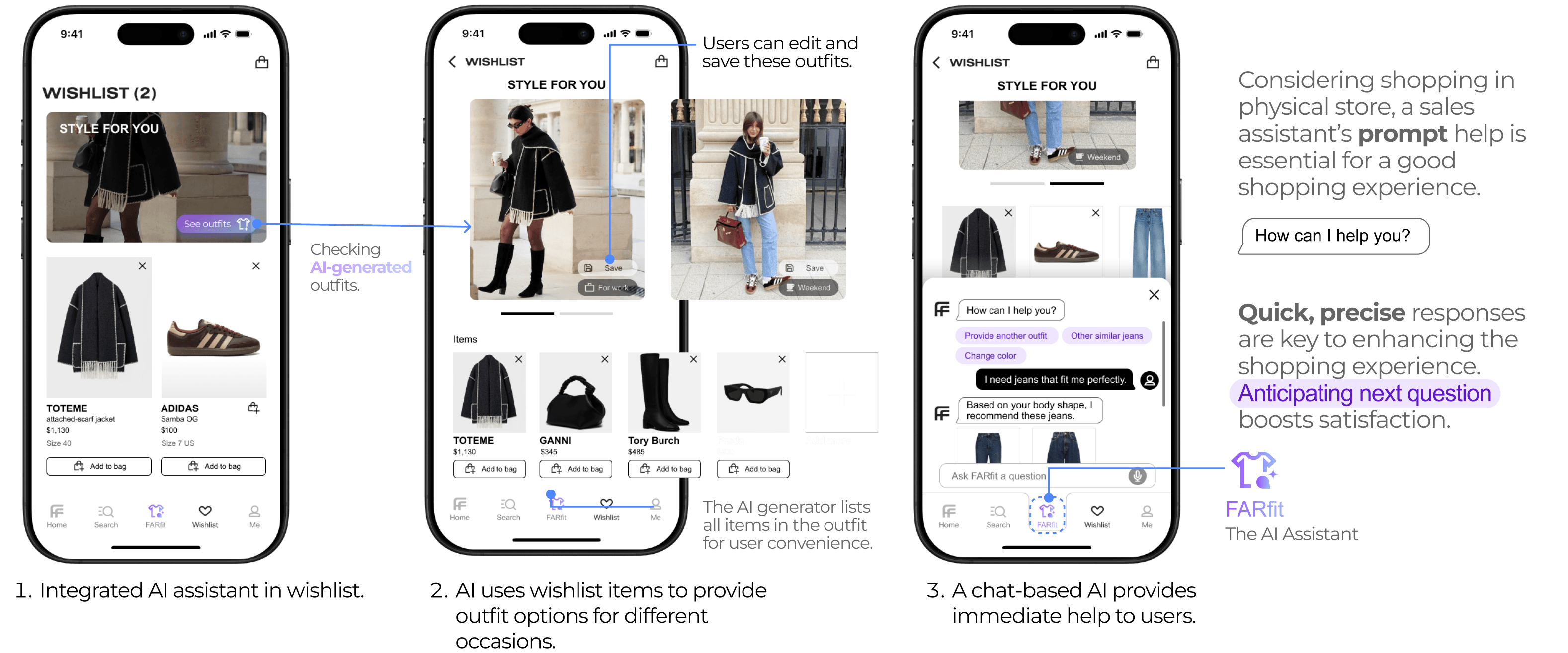
Scenario 3, wishlist. The AI assistant builds outfits around the items already in the shopper's wishlist, and a chat lets them refine each look further.